A Practical Review of a Playful SVG for Crafts & Graphics
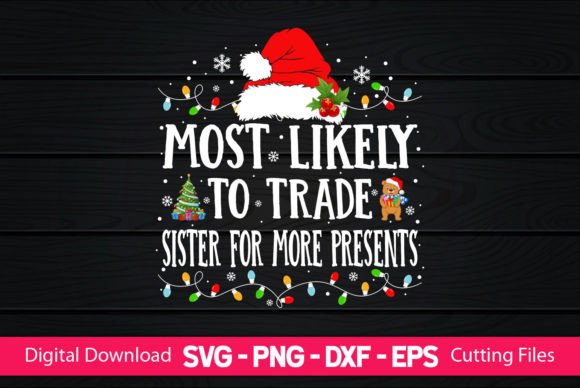
If you're stocking your digital shop ahead of the holidays, you'll likely come across designs like Most Likely to Trade Sister for More Presents. As someone who creates and sells digital products, my first step is always a practical evaluation: does this asset have the potential to sell, and how can I use it effectively? Opening the files—typically an SVG, PNG, EPS, and DXF for cutting machines—the immediate impression is one of playful, tongue-in-cheek humor. The mood is festive, lighthearted, and geared towards a very specific niche: families, siblings, or anyone who appreciates a funny, relatable take on holiday dynamics.
Niche Appeal and Visual Personality
The design’s personality is bold and conversational. It doesn’t feel elegant or minimal; it’s decorative and meant to stand out. This isn’t a generic holiday graphic. It speaks directly to an audience that enjoys personalized, humorous gifts and home decor. For sellers targeting Etsy, Creative Fabrica, or print-on-demand platforms, this means you’re not competing in the broad “Christmas ornament” market. You’re catering to buyers looking for something with character—likely shoppers for custom t-shirts, quirky mugs, or printable cards for a sister. The style leans commercial-cute, with clean lines that promise good results on physical products.
Testing the Design Across Sellable Products
Before I list anything, I test a graphic design asset across several product mockups. For Most Likely to Trade Sister for More Presents, I’d start with the obvious: t-shirt graphics and mug designs. The text-based nature makes it a strong candidate for sublimation designs and heat transfers. But don’t stop there. Think about printable wall art for a playful nursery or office, or a digital paper pack element for scrapbooking kits. It could be a focal point in a Canva template for holiday invitations, or used as a bold graphic on a tote bag print.
Its simplicity also makes it adaptable. You could pair it with a serif font for a more classic greeting card, or keep it solo with a bold sans serif for a modern tumbler wrap. Testing it as a PNG on dark and light backgrounds is crucial—check that the contrast holds up for thumbnail appeal on your marketplace listings. For Cricut projects like planner stickers or intricate vinyl decals, the SVG’s cut lines need to be clean and well-defined. A quick test cut on a sample material is a wise step.
Where This Design Excels in Product Presentation
This asset can significantly help with product presentation. In mockup previews for your Etsy product or Shopify store, its clear message creates instant visual storytelling. It tells a story, which builds customer trust and perceived value. For a seasonal collection of sibling-themed graphics, it adds brand consistency and a cohesive mood. Using it in large product previews or as a hero image in your listing can improve click-through potential. It’s also a strong candidate for social media graphics and blog graphics to promote a larger holiday bundle.
Think beyond single items. This design could anchor a themed bundle: combine it with other “Most Likely To…” SVG designs for a digital download pack that sells better as a curated collection. For creative marketplace listings, such bundles increase the average order value and make your shop look more professional.
Potential Pitfalls and Practical Seller Notes
While versatile, Most Likely to Trade Sister for More Presents should be used carefully in certain contexts. Avoid using it in tiny sticker details where the text becomes illegible. It’s not suited for overly complex layouts or crowded thumbnails—it needs space to be read. On low-resolution print products, the text might blur, so always verify file resolution and test a small print. If you’re incorporating it into text-heavy templates, ensure it doesn’t clash with other fonts and maintains a clear visual hierarchy.
A few practical steps are non-negotiable. First, confirm the commercial license if you’re selling finished products. Organize the files clearly for your customers—label the SVG, PNG, etc., so they know exactly what they’re getting. Preview the PNG’s transparency on different colored mockups. Inspect the SVG layers; sometimes designs need simple cleanup for optimal Cricut or Silhouette use. Finally, test the colors if you’re offering printed products; a vibrant red might look different sublimated onto fabric versus printed on paper.
Integrating the Asset into a Professional Collection
The ultimate goal is to build a professional-looking online product collection. This digital product can play a key role. It’s a ready-made commercial design that saves you creation time. Use it to flesh out a holiday crafts section, or as part of a broader brand identity for a shop focused on family humor. Pair it with complementary assets—maybe simple illustration borders or matching holiday clipart—to create cohesive packaging design for your digital downloads.
For small business branding, especially in the handmade business space, such a distinct design helps you stand out. It’s not just a graphic; it’s a potential product line. From social media templates announcing your new collection to using it in promotional visuals for your blog, the asset works across your entire selling ecosystem. The key is to treat it not as a single file, but as a component in a larger commercial strategy for your creative marketplace presence.
In my real shop scenario, preparing for a seasonal launch on Etsy or a print-on-demand platform, I would list this design not just as a standalone SVG, but as part of several finished products. I’d create mockups for a t-shirt, a mug, and a printable card, using the same core design to show its versatility. This approach demonstrates its value to buyers and increases the chances of a sale. It turns a simple graphic design asset into a multi-use tool for digital selling, which is exactly what savvy digital product creators need.