A Hydrangea Line Art Design for Real-World Embroidery
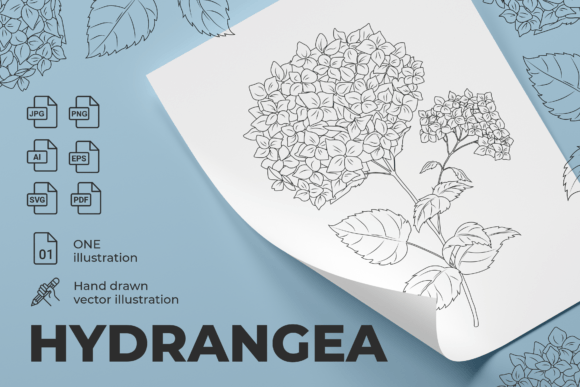
When you’re looking at a digital design for your next embroidery project, it’s not just about whether it looks nice on screen. It’s about imagining how it will look as stitches on fabric, how it will feel in a client’s hands, and how it will hold up as a finished product. That’s the lens I use when evaluating a design like Hydrangea Flower Line Art Vector.
The First Impression: Light, Airy, and Versatile
Opening this file, my immediate thought was "this is gentle." The hand-drawn, vector illustration of a hydrangea branch has an open, airy quality. The lines aren’t overly dense or cramped. This creates a mood that’s soft, botanical, and subtly elegant—not loud or overpowering. That visual personality tells me this isn’t a design for a bold, statement logo patch. Instead, it naturally belongs to projects where a touch of understated beauty is key: think custom baby blankets, delicate pillow covers for a boutique, or a personalized gift like a tea towel or apron.
Where This Hydrangea Branch Thrives
In real-life embroidery situations, this design’s strength is its adaptability. The line art style means it can scale beautifully without losing its clean edges, thanks to those vector formats like SVG and AI. For a craft business owner, that’s gold. You can use the same core asset for a small, delicate monogram on a baby romper and a larger, central motif on a canvas tote bag for your Etsy listings. I immediately pictured it on a light-colored, natural linen tote—the organic feel of the fabric would complement the botanical line work perfectly, elevating a simple bag into a thoughtful, handmade product.
It’s also ideal for projects where you want the embroidery to feel like part of the fabric, not a heavy overlay. On a lightweight cotton sweatshirt, a fill stitch version of this design could be lovely, but the line art itself suggests a running stitch or a lighter satin stitch outline to maintain that airy feel. For holiday gifts like embroidered pillow covers or kitchen towels, this hydrangea offers a timeless, non-seasonal elegance that feels special without being themed.
Navigating the Practical Considerations
Any experienced embroidery designer knows that a beautiful screen graphic can present challenges on the hoop. The open, detailed nature of this hydrangea branch means you need to be thoughtful about placement and execution.
On very small hoop sizes, some of the finer line details might need simplification to remain clear and prevent thread breakage. Stitching this onto textured fabrics, like a thick sweater, could lose some of the delicate line clarity unless you use a firm stabilizer and perhaps opt for a slightly thicker thread for definition. Similarly, on dark fabric, the design would need to be stitched with a high-contrast thread color to pop—testing on scrap fabric first is essential here.
For curved surfaces like caps, the overall spread of the branch layout would work well, but you’d want to check the orientation in your software to ensure the longest lines follow the curve of the cap smoothly. This isn’t a design with tiny, cramped corners, which is a plus for durability on items that need frequent washing, like aprons or baby clothes. The absence of extremely dense stitch areas suggests it will wear well.
How This Design Adds Value to Your Work
Using a design like Hydrangea Flower Line Art Vector affects more than just the stitch pattern. It influences the perceived value of your finished product. This kind of clean, professional illustration, when embroidered neatly, immediately boosts customer trust. It signals that you’ve chosen a quality design asset, which reflects on your brand’s consistency and professionalism.
For a personalized gift, it feels more "designer" than generic. A client receiving an embroidered tote bag with this hydrangea isn’t just getting a bag with a flower; they’re getting a piece that feels curated and intentional. That enhances giftability and buyer engagement for your small shop products. In printable mockups for your digital product listings or craft fair previews, the high-resolution 300 dpi files ensure your previews look sharp, helping customers visualize the final embroidered item accurately.
Notes from the Worktable
Before you load this embroidery file into your machine for a client’s custom apparel or your next batch of merchandise, a few practical steps are non-negotiable.
- Always test the design on a scrap of your intended fabric first. Check the thread color contrast—do the lines stand out clearly on both light and dark backgrounds?
- Review the stitch density in your software. The provided multiple formats (JPEG, PNG, AI, EPS, SVG, PDF) are fantastic for different stages, but your embroidery machine file will be generated from your interpretation. Does the satin stitch or fill stitch path you create maintain the light feel?
- Confirm your hoop size can accommodate the design at your desired scale without forcing compression of the details.
- Inspect the small details, like the connection points between florets, to ensure they’ll stitch cleanly without jumps or breaks.
- Consider creating simple black and white mockups to see the design purely as shape and form, stripping away color influence.
- Use the proper stabilizer for your fabric type—this is crucial for preserving the design’s integrity on stretchy or thin fabrics.
Finally, a critical note for all creative entrepreneurs: always confirm the licensing terms before selling finished items or commercial embroidery projects using any design asset. The product description mentions it's ideal for coloring, which suggests flexibility, but the exact terms for commercial use aren't detailed here. Verify that your intended use—whether for handmade products in your Etsy store or for digital embroidery files you might sell—is fully covered. This protects your craft business and ensures your hard work on that beautiful embroidered patch or sweatshirt is built on a solid foundation.
In summary, Hydrangea Flower Line Art Vector presents a lovely, versatile starting point for embroidery projects that demand a soft, elegant touch. Its hand-drawn, airy quality translates into a wide range of applications, from baby embroidery to boutique home decor. By approaching it with the practical considerations of an embroidery designer—testing, adjusting for context, and verifying licenses—you can turn this graphic into a truly standout finished product that resonates with customers and feels authentically handmade.